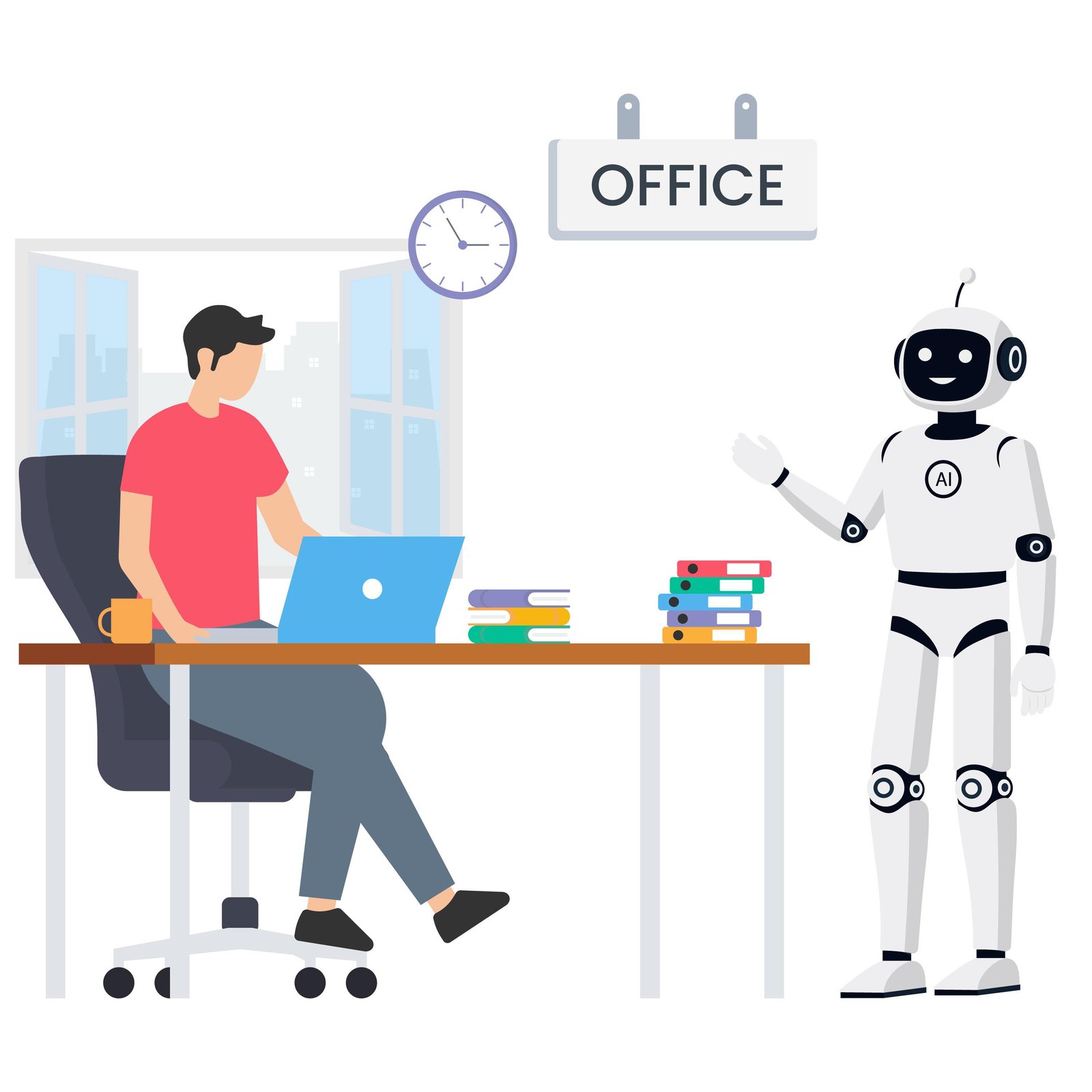
Artificial Intelligence (AI) is no longer a distant future concept—it is actively reshaping the global workforce in 2026. From AI-powered chatbots handling customer inquiries to coding assistants generating functional software, machines are performing tasks once reserved for humans. Yet the narrative is nuanced: AI is not simply destroying jobs but transforming work, boosting productivity, and creating new opportunities.
This comprehensive guide examines the genuine state of AI’s impact on employment in 2026, drawing from reports by the World Economic Forum (WEF), BCG, Goldman Sachs, MIT, and other credible sources. It addresses common fears, provides balanced analysis, and offers practical advice for workers, students, and leaders.
The Big Picture: AI’s Impact on Global Employment in 2026
AI adoption accelerated dramatically between 2024 and 2026. While per-token costs and model capabilities improved, the real shift came from agentic AI—systems that plan, execute, and iterate autonomously.
Key Statistics (2026 Context):
- BCG estimates that 50-55% of US jobs will be reshaped by AI over the next 2-3 years, with only 10-15% fully eliminated in the near term.
- Goldman Sachs projects AI could expose around 300 million full-time jobs globally to automation, though the timeline spans 10+ years.
- WEF’s Future of Jobs Report (2025 data) forecasts 92 million jobs displaced and 170 million new jobs created by 2030—a net gain of 78 million.
- In 2026 so far, AI was cited in tens of thousands of layoffs (e.g., ~17% of early-year cuts), but the bigger effect is suppressed entry-level hiring, down significantly in white-collar sectors.
Reality Check: AI drives efficiency gains that can expand demand for goods/services (Jevons Paradox), often leading to more jobs overall. However, transitions create friction—workers need reskilling, and inequality risks rise without proactive policies.
Companies report using AI to handle routine tasks, allowing humans to focus on higher-value work. Yet many pilots fail to deliver clear ROI, tempering aggressive replacement strategies.
Jobs Disappearing or Shrinking Rapidly in 2026
Roles heavy on repetitive, rule-based, or data-processing tasks face the highest risk. Automation risk often exceeds 70-95% for core duties.
1. Data Entry & Clerical Work AI tools with intelligent document processing (IDP) and OCR handle thousands of documents hourly with high accuracy. Demand for basic data entry clerks has plummeted; many firms report 80-95% automation potential. Outlook: Rapid decline, especially entry-level.
2. Basic Customer Support & Call Center Roles AI chatbots, voice agents, and ticket-resolution systems manage routine inquiries 24/7. Companies handle thousands of interactions simultaneously. Significant reductions reported across retail, banking, and telecom.
3. Routine Accounting, Bookkeeping & Tax Preparation AI generates reports, detects anomalies, and automates filings. Basic roles are shrinking; demand shifts toward oversight and complex advisory work.
4. Telemarketing & Cold-Calling Sales AI qualifies leads, personalizes outreach, and conducts initial conversations. Near-extinction for high-volume, script-based roles.
5. Entry-Level Coding, Testing & Basic Software Tasks Tools like Claude Code, GitHub Copilot, and agentic systems generate code, debug, and document. Firms report efficiency gains reducing junior hiring (e.g., 35% drop in some entry-level tech postings).
6. Manufacturing Assembly & Routine Factory Work Robotics + AI vision systems enable 24/7 production with predictive maintenance. MIT/BU estimates up to 2 million manufacturing roles impacted by 2026.
Additional At-Risk Areas: Basic content moderation, simple graphic design drafts, routine legal document review, and cashiers in retail.
Why These Jobs? They involve predictable patterns AI excels at—pattern recognition, data processing, and rule application.
Jobs Being Transformed (Augmented, Not Eliminated)
Most roles (50-55%) fall here. AI handles drudgery; humans focus on judgment, creativity, and relationships.
Teachers & Educators: AI automates grading, generates lesson plans, and provides personalized tutoring. Teachers shift to mentorship, emotional support, and critical thinking facilitation.
Healthcare Professionals (Doctors, Nurses, Therapists): AI aids diagnosis (e.g., imaging analysis) and administrative tasks. Humans deliver empathy, complex judgment, and patient relationships.
Software Developers: AI writes routine code and tests. Developers architect systems, solve novel problems, integrate AI ethically, and innovate.
Marketing Professionals: AI generates ads, content drafts, and analytics. Humans craft strategy, brand voice, cultural nuance, and campaign oversight.
Other Examples: Journalists (AI research + human storytelling), lawyers (AI document review + strategy/advocacy), and financial analysts (AI modeling + interpretation).
Key Insight: Augmented workers become more productive. BCG notes demand expansion from productivity gains can create more human roles.
Jobs That Will Survive and Grow
Roles requiring empathy, creativity, physical dexterity in unpredictable environments, ethical reasoning, and leadership remain resilient.
1. Healthcare & Caregiving Roles Empathy and nuanced care cannot be fully replicated. Demand grows with aging populations and AI-assisted diagnostics increasing throughput.
2. Creative Professionals Designers, filmmakers, writers, and artists use AI as a tool but provide originality, emotional resonance, and cultural context.
3. Leadership, Management & Strategy Roles Emotional intelligence, negotiation, ethical decision-making, and vision-setting are irreplaceable.
4. Skilled Trades & Hands-On Work Electricians, plumbers, mechanics, and construction specialists handle variable real-world conditions.
5. Cybersecurity, Ethics & Safety Experts AI increases attack surfaces; human oversight for governance, red-teaming, and complex threat response grows rapidly.
6. Educators, Trainers & Coaches (Advanced Levels)
Human connection drives these fields even as tools evolve.
New Jobs Created by AI in 2026 and Beyond
AI generates net-positive opportunities. LinkedIn and others rank AI-related roles among the fastest-growing.
Fast-Growing Roles:
- AI/ML Engineer: #1 fastest-growing job in many reports; 143%+ YoY postings. Salaries $140K–$280K+.
- Data Scientist / AI Analyst: Core for insights and model oversight.
- Prompt Engineer / AI Agent Developer: Designing effective interactions and autonomous systems.
- AI Ethics & Governance Specialist: Bias mitigation, compliance, responsible deployment.
- AI Product Manager: Bridging tech and business needs.
- MLOps / AI Solutions Architect: Deployment, scaling, and integration.
- AI Security / Red Teaming Specialists.
- Chief AI Officers in enterprises.
Emerging Niches: AI Trainer (fine-tuning models), RAG Engineer, Synthetic Data Specialist, and Human-AI Collaboration Designer.
WEF highlights technology roles (fintech engineers, AI specialists) leading growth.
Why Entry-Level Jobs Are Declining Sharply
AI automates foundational tasks, reducing junior positions. Entry-level postings in the US dropped significantly (11-35% in affected sectors). New graduates face higher skill bars—AI literacy is now baseline.
This creates a “missing rung” on the career ladder. Solutions include apprenticeships, AI-augmented internships, and stronger vocational pathways.
Essential Skills to Thrive in the AI Era (2026–2030)
Technical Skills:
- AI tool proficiency and prompt engineering.
- Basic data literacy and Python/ML fundamentals.
- Understanding of AI limitations and verification.
Human Skills (Increasingly Valuable):
- Critical thinking and complex problem-solving.
- Emotional intelligence and empathy.
- Creativity and innovation.
- Ethical reasoning and judgment.
- Adaptability and lifelong learning.
- Communication and collaboration (including with AI systems).
Strategy for Individuals:
- Treat AI as a co-pilot.
- Build portfolios demonstrating human + AI output.
- Pursue certifications in high-demand areas.
- Focus on transferable skills across industries.
Challenges and Societal Considerations
- Inequality: Not all workers have equal access to reskilling.
- Mental Health: Rapid change causes anxiety; support systems needed.
- Policy Needs: Unemployment support, education reform, potential UBI experiments.
- Ethical AI: Bias, transparency, and accountability matter.
Many experts emphasize augmentation over replacement. Humans who collaborate with AI will outperform those who resist it.
Strategies for Companies, Educators, and Policymakers
Companies: Invest in reskilling (77% of WEF employers plan this), redesign workflows for human-AI teams, and measure true ROI beyond headcount reduction.
Educators: Integrate AI literacy early while emphasizing human skills. Update curricula for 2030 realities.
Workers: Continuous learning is non-negotiable. Experiment with tools daily and network in growing fields.
Final Thoughts: Evolving With AI
In 2026, AI is not the end of work but the start of a more productive, creative era. Repetitive jobs are shrinking, knowledge work is evolving, human-centric roles are thriving, and entirely new careers are booming.
The winners will be those who adapt—learning to leverage AI while doubling down on uniquely human strengths like empathy, creativity, and judgment. The question is no longer “Will AI replace my job?” but “How can I evolve alongside it?”
Start today: Experiment with AI tools in your current role, identify skill gaps, and build a growth plan. The future of work belongs to the proactive.