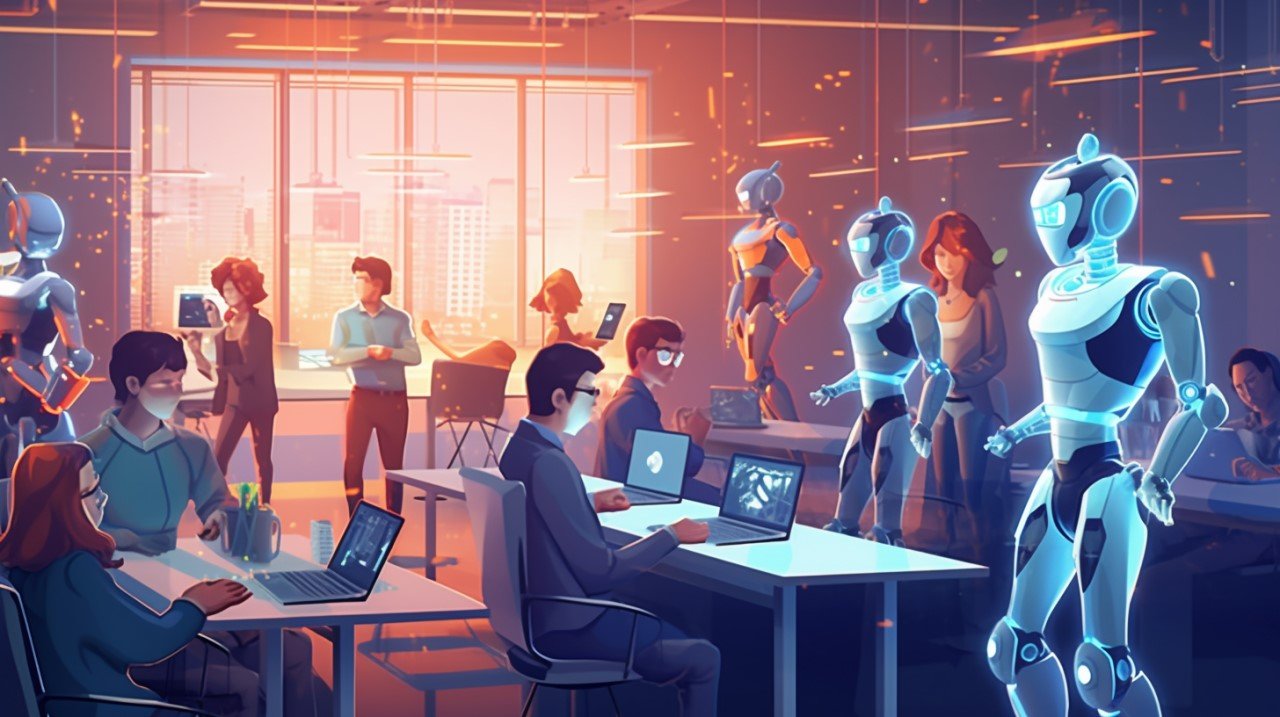
Artificial Intelligence (AI) is no longer a futuristic concept confined to research labs or science fiction. In 2026, AI has become an everyday companion for millions of students, teachers, and professionals worldwide. From personalized tutoring to automated note-taking and career guidance, AI is reshaping how students learn, grow, and prepare for the workforce.
This expanded guide provides a thorough, factual overview of AI in education. It draws on the latest 2026 data and trends to help students, parents, and educators understand its potential while addressing challenges. Whether you're a high school student struggling with math or a university learner aiming for a tech career, this article equips you with actionable insights.
What Is Artificial Intelligence? A Clear Explanation for Students
Artificial Intelligence refers to computer systems designed to perform tasks that typically require human intelligence, such as understanding natural language, recognizing patterns in images, solving complex problems, learning from data, and making informed decisions.
At its core, AI works through:
- Machine Learning (ML): Algorithms that improve automatically through experience. For example, recommendation systems on Netflix or YouTube learn your preferences over time.
- Natural Language Processing (NLP): Enables AI to understand and generate human language, powering tools like chatbots and essay assistants.
- Computer Vision: Allows machines to interpret visual information, useful in fields like medical imaging or augmented reality learning.
- Generative AI: Models like those behind ChatGPT or Claude that create new content — text, images, code, or summaries — based on patterns in vast datasets.
In 2026, generative AI tools are widely accessible via free tiers, making them everyday utilities. However, AI is not sentient; it excels at pattern recognition and prediction but lacks true understanding, creativity, or ethics without human guidance.
Real-World Examples Students Encounter Daily:
- Voice assistants (Siri, Google Assistant) for quick queries.
- Recommendation engines on shopping or learning apps.
- Adaptive learning platforms that adjust difficulty based on performance.
Understanding these foundations helps students use AI more effectively rather than treating it as a "magic box."
The Evolution of AI in Education: From 2020 to 2026
AI adoption in education accelerated dramatically post-2020. Early tools focused on basic automation, but by 2025–2026, generative AI became mainstream.
Key 2026 statistics:
- 92% of students globally use AI tools, up from 66% in 2024.
- Four in five students report improved academic performance thanks to AI.
- The global AI in education market is projected to grow from around $7–10 billion in 2025–2026 to over $136 billion by 2035, with a CAGR exceeding 34%.
Schools and universities are shifting from experimentation to structured integration, with a strong emphasis on governance, ethics, and teacher training. Many districts still lack formal AI policies (around 40% in K-12), highlighting the need for responsible frameworks.
How AI Is Helping Students Today: Practical Benefits and Use Cases
AI personalizes learning, saves time, and boosts outcomes. Here's a detailed breakdown:
1. Smart Learning Assistants and Personalized Tutoring
AI tutors adapt in real-time to a student's pace, strengths, and weaknesses. A 2025 randomized trial showed AI tutors outperforming traditional methods with large effect sizes, achieving better results in less time (49 minutes vs. 60).
Examples:
- Tools explain concepts in simple terms, provide step-by-step solutions, and offer instant feedback.
- Multilingual support helps non-native speakers.
- Adaptive platforms adjust lesson difficulty dynamically.
2. Assignment and Writing Support
AI assists with idea generation, outlining, grammar checking, summarizing, and structuring essays without replacing student effort.
Popular applications:
- Brainstorming thesis statements.
- Improving clarity and flow.
- Citation suggestions (with human verification needed).
Studies show this leads to better academic performance when used as a learning aid rather than a shortcut.
3. Time Management and Productivity Tools
AI-powered planners analyze schedules, predict deadlines, and suggest optimal study times based on personal productivity patterns.
Benefits include reduced procrastination and better work-life balance, especially for students juggling academics, extracurriculars, and part-time jobs.
4. Lecture Notes, Summaries, and Revision Aids
AI transcribes lectures, generates concise summaries, creates mind maps, and even produces audio overviews.
Tools like NotebookLM excel here, turning uploaded materials into interactive study resources.
5. Solving Math, Science, and Complex Problems
AI breaks down problems step-by-step, visualizes concepts (e.g., molecular structures), and offers practice variations.
This shifts focus from rote memorization to deep conceptual understanding.
Additional Benefits in 2026:
- Early identification of at-risk students for timely intervention.
- Enhanced accessibility for learners with disabilities through voice interfaces and adaptive content.
- Global collaboration via AI translation and cultural context tools.
Teachers also benefit: Regular AI users save nearly six weeks per year on administrative tasks.
Top AI Tools for Students in 2026: Free and Paid Options
Here are proven, high-quality tools based on current usage:
- ChatGPT / GPT Models: Versatile for brainstorming, explanations, and drafting. Strong in casual and research tasks.
- Google Gemini: Excellent integration with Google Docs/Drive; great for students in the Google ecosystem.
- Claude: Superior for long-form writing, analysis, and following complex instructions.
- Grammarly: Real-time writing coach with AI agents for editing and citations.
- NotebookLM: Ideal for research, summarizing documents, and creating study aids.
- Perplexity AI: Research-focused with source citations.
- Notion AI: Organizes notes, plans, and projects intelligently.
- Quizlet + AI Features: Adaptive flashcards and practice tests.
- Specialized tools like Vitara AI for coding projects or Canva AI for presentations.
Tips for Selection: Start with free tiers. Choose based on needs (e.g., Claude for writing, Gemini for integration). Always cross-verify facts.
Essential AI Skills Students Must Develop for Future Success
The job market is evolving rapidly. By 2030, ~70% of job skills may change due to AI.
Core Skills to Learn:
- Basic Programming: Python is foundational for understanding AI.
- Data Analysis and Visualization: Using tools like Excel, Tableau, or Python libraries.
- Machine Learning Basics: Concepts like training models and evaluation.
- Prompt Engineering: Crafting effective instructions for AI tools.
- Critical Thinking and AI Literacy: Evaluating outputs for bias, accuracy, and ethics.
- Digital Collaboration: Working alongside AI in team settings.
Schools are increasingly adding AI competency courses. Students who build these skills early gain a significant edge.
Careers Shaped by Artificial Intelligence: Opportunities and Salaries
AI is creating millions of new roles while transforming existing ones. In 2026, AI-related jobs offer strong growth and premiums.
High-Demand Careers:
- AI/ML Engineer: $134,000–$193,000+ (US averages).
- Data Scientist: $121,000–$182,000.
- AI Architect/Solutions Architect: Up to $251,000.
- Prompt Engineer / AI Product Manager.
- Cybersecurity Analyst (AI-enhanced).
- Robotics Engineer.
- Emerging roles: AI Agent Developer, RAG Engineer.
Market Insights:
- Workers with AI skills earn 56% wage premiums.
- Demand far outstrips supply (global talent gap ~3:1).
- 50–55% of US jobs will be reshaped by AI in coming years, creating more augmentation than replacement.
Non-tech fields (healthcare, education, finance, creative industries) also need AI-literate professionals.
Ethical Considerations: Is AI Dangerous for Students?
AI is a powerful tool — its value depends on responsible use.
Positive Practices:
- Using AI to understand concepts deeply.
- Enhancing productivity while building personal skills.
- Collaborating with AI as a "co-pilot."
Risks and Bad Practices:
- Over-dependence leading to skill atrophy.
- Blind copying (plagiarism and academic dishonesty).
- Privacy concerns: Student data collection and potential misuse.
- Bias in AI outputs perpetuating inequalities.
- Reduced critical thinking or human interaction.
Best Practices for Ethical Use:
- Always cite AI assistance.
- Verify information independently.
- Focus on learning processes, not just outputs.
- Schools should implement clear policies on AI use.
Data privacy, equity (digital divide), and maintaining teacher-student relationships remain key challenges.
How AI Will Transform Education in the Coming Years (2026–2030)
Predictions for the near future include:
- Hyper-Personalized Learning: AI tutors standard in many schools, adapting 24/7.
- Immersive Technologies: VR/AR combined with AI for experiential learning.
- Automated Assessment: Faster, fairer feedback with human oversight.
- Global Access: Bridging gaps in under-resourced areas.
- Teacher Empowerment: More time for mentoring as AI handles routine tasks.
By 2030, AI could help make education more inclusive and effective, but success depends on ethical governance and human-centered design.
How to Get Started with AI as a Student Today
- Experiment with free tools daily.
- Take online courses (many platforms offer free AI literacy modules).
- Join school clubs or online communities focused on AI.
- Practice ethical prompting and verification.
- Build small projects (e.g., a simple AI-assisted study app).
- Discuss AI use openly with teachers and parents.
Final Thoughts: AI as the Present, Not Just the Future
Artificial Intelligence is fundamentally changing education in 2026. Students who embrace it wisely — combining powerful tools with strong fundamentals, critical thinking, and ethics — will learn faster, achieve more, and thrive in future careers.
AI does not replace human effort or creativity; it amplifies them. Start small, stay curious, and use technology as a bridge to greater knowledge and opportunity. The students who master this balance today will lead tomorrow.